Since 1961 Gamma Scientific has produced LED, display and light measurement test solutions for production and R&D environments.
With over 50 years of innovation in optics, photonics and optoelectronics metrology, Gamma Scientific instruments are trusted by leading global organizations that require high-speed, precision measurements and custom configurations for the most challenging environments.
Based in San Diego, California, Gamma Scientific manufactures laboratory grade spectroradiometers, spectrometers, spectrophotometers, integrating spheres and light sources. Gamma Scientific also operates an ISO 17025 compliant, NVLAP accredited laboratory (NVLAP Lab Code 200823-0) that performs ENERGY STAR® lighting certification and LM-79 testing.
Light Measurement Guides and Tutorials from Gamma Scientific, UDT Instruments and RoadVista
Thin Film Measurement
“The first step in the measurement process is to calibrate the reflectance measurement scale of the spectroradiometer connected to the gonioreflectometer optical head for the chosen angle of incidence. This is accomplished by using the known physical properties of glass materials and the known physical properties of light interaction with materials.”
- Measurement of Optical Thin Film Coatings on Glass (PDF)
- Thin Film Measurement Systems from Gamma Scientific
- Gamma Scientific Reflectance Spectrophotometers
- Gamma Scientific Gonioreflectometers
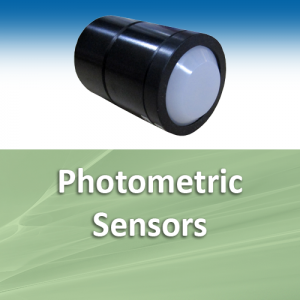
Photometry and Photometric Testing
“Photometry is the science concerned with measuring human visual response to light. Because the eye is a highly complex organ, this is by no means a simple task. It involves the meeting of many disciplines: psychology, physiology, and physics among them.”
- UDT Instruments Guide to Photometry (PDF)
- Photometer Solutions from Gamma Scientific
- What is Photometry?
- How to Specify a Photometric System
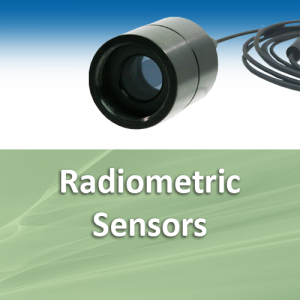
Radiometry and Radiometric Testing
“Radiometry is the measurement of radiation in the electromagnetic spectrum. This includes ultraviolet (UV), visible and infrared (IR) light. The visible region of the electromagnetic spectrum can divide into the basic colors of the rainbow: red, orange, yellow, green, blue, indigo and violet. Red light has the longest wavelength in the visible region (780 nm). Violet has the shortest (380 nm). Ultraviolet light is shorter in wavelength than visible light. It extends approximately from 10 nm to 400 nm.”
- UDT Instruments Guide to Radiometry (PDF)
- An Introduction to Radiometry
- Radiometer Systems from Gamma Scientific
Colorimetry
“The science of colorimetry is used to quantify the response of the human visual system and match human color perception for applications in a variety of industries. Colorimetry is used in display manufacturing, broadcasting, graphic design, computer animation and many other fields.”
- What is Colorimetry?
- 11 Reasons to Upgrade Your Colorimeter
- Improved Chromaticity and Luminance Measurements Using a Tristimulus Colorimeter
- What You Need to Know About Display Calibration
- Key Concepts in Monitor Calibration
- Gamma Scientific Colorimeters
Measuring Spectral Performance of Night Vision Devices
“Since the inception of night vision equipment in the early 1950s the development of night vision goggles has progressed through three generations of image intensifier tubes.The present generation (commonly referred to as GEN III) of goggles with gallium arsenide (GaAs) photocathodes provides many times better performance with nightsky radiance than the second generation AN/PVS-5 Aviators Night Vision Imaging System (ANVIS).”
- Measuring Spectral Performance of Night Vision Devices-ANVIS (PDF)
- Gamma Scientific Night Vision Testing Instruments
LED Light Sources Tutorial
“Eigenlite sources use light emitting diodes driven by digitally controlled constant current circuits. Use of precision voltage references, along with active optical feedback, together maintain a stable output and allow dial-operated ‘ultra-linear’ brightness adjustment. In addition to linear digital brightness control, multiple independent spectral channels provide spectral and colorimetric programmability of the output.”
RoadVista Guide to Retroreflectivity and Retroreflection
“Retroreflectivity, or retroreflection, is an optical phenomenon in which reflected rays of light are preferentially returned in directions close to the opposite of the direction from which the rays came.This property is maintained over wide variations of the direction of the incident rays. Retroreflection is achieved through multiple reflections within a retroreflector. Common retroreflectors are cube corners and microspheres of glass or plastic.”
- Retroreflectivity Guide – RoadVista (PDF)
- RoadVista Retroreflectometers and Highway Safety Measurement Equipment
Photodetectors and Position Sensing
“Photodetectors that measure the brightness of light sources find use all around us. They are contained within such everyday items as cameras, bar-code readers, and laser printers. They are a mainstay in most scientific instruments used to measure light intensity or color. But there is another class of optical detectors unrelated to light source brightness measurements, and though these devices find use in a wide range of applications, many technologists are unfamiliar with them.”
“To understand optical position sensing instruments, it’s important to understand the sensors they make use of. These form the heart of the systems, and fall into two basic categories: segmented and continuous. This position sensor and position sensing guide features detailed information on non-contact position sensing using optical detectors.”
- Non-Contact Position Sensing Using Optical Detectors
- Photodetectors and Optical Sensors from Gamma Scientific
Fiber Optic Testing
“Watts are the basic units of optical power measurement. In fiberoptics, decibel units are the logarithmic transformations of watts and submultiples of watts. Decibel units are used in fiberoptics because they provide a convenient means of condensing power measurement information that has a wide dynamic range. Since fiberoptic power levels cover many orders of magnitude, the logarithmically compressed decibel scale is commonly used.”